Creating a Character
Step by step from race and class through ability scores, alignment, equipment and levelling up.
How to Play Creating a Character
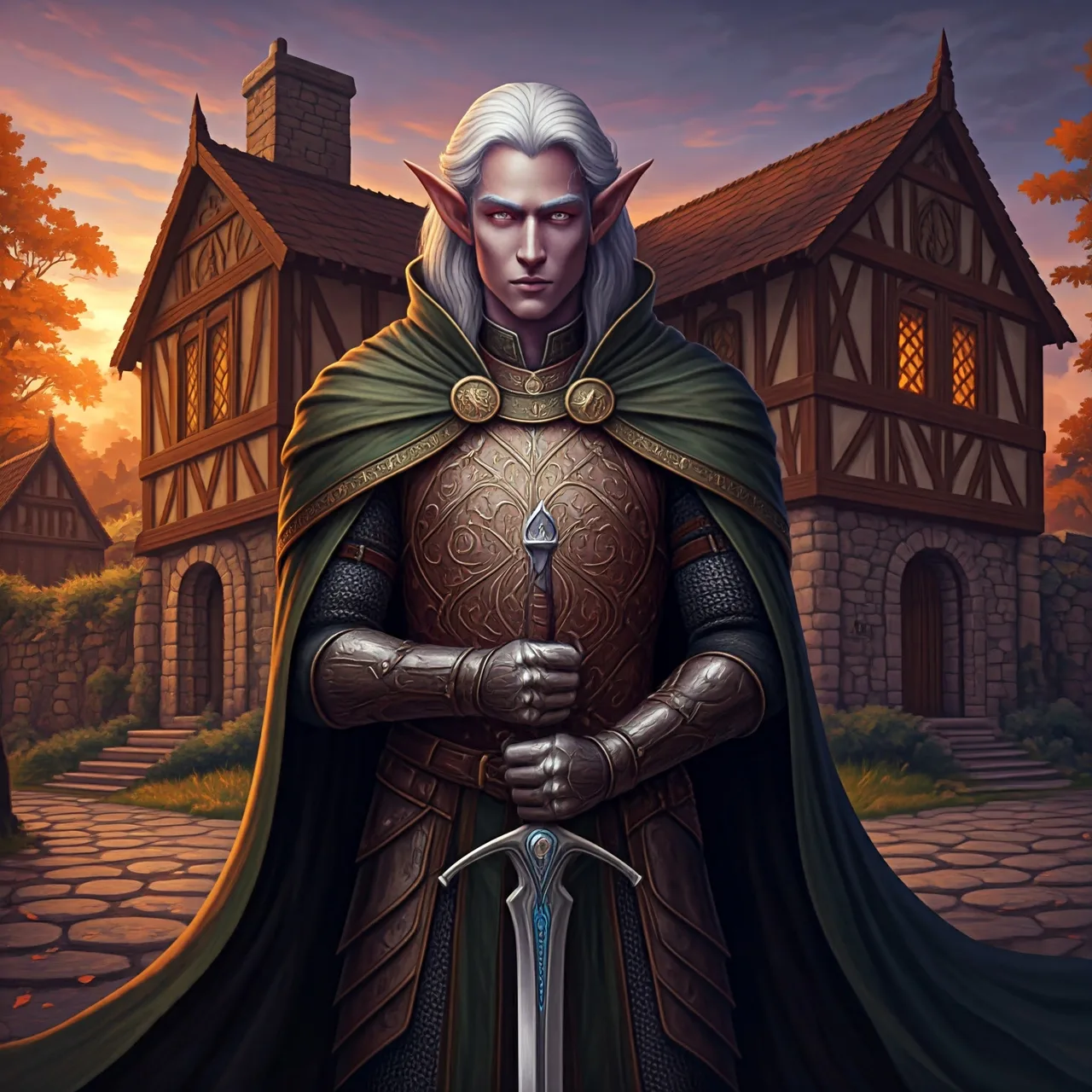
Step-By-Step Characters
The first step in playing an adventurer in Dungeons & Dragons is to imagine and create a character of your own. Your character is a combination of game statistics, roleplaying hooks, and your imagination. You choose a race (such as human or halfling) and a class (such as fighter or wizard). You also define your character’s personality, appearance, and backstory. Once completed, your character serves as your representative in the game, your avatar in the Dungeons & Dragons world.
Before you begin, think about the type of adventurer you want to play. You might envision a courageous fighter, a stealthy rogue, a devoted cleric, or an eccentric wizard. Alternatively, you could create an unconventional character, like a brawny rogue who favors hand-to-hand combat or a sharpshooter who picks off enemies from a distance. If you enjoy fantasy fiction featuring dwarves or elves, consider building a character from one of those races. If you want your character to be the toughest at the table, classes like barbarian or paladin might suit you. You can also look at the illustrations in this book for inspiration.
Once you have a character in mind, follow the steps in order, making decisions that reflect your vision. Your conception of your character may evolve with each choice, but what matters is that you arrive with a character you're excited to play. Throughout this chapter, the term "character sheet" refers to whatever you use to track your character, whether it’s a formal character sheet, a digital record, or a piece of notebook paper. A custom digital character sheet will be provided with this book and we highly recommend you use it, as it does most of the necessary Ability Score calculations for you!
Choose a Race
Every character belongs to a race, one of the many intelligent humanoid species in the D&D world. The most common player character races are dwarves, elves, halflings, and humans, with some races having subraces, such as mountain dwarf or wood elf. Races provides more information about these races, as well as the less widespread dragonborn, gnomes, half-elves, half-orcs, tieflings and much, much more.
The race you choose significantly contributes to your character’s identity by establishing a general appearance and granting natural talents from culture and ancestry. Each race provides specific racial traits, such as special senses, proficiency with certain weapons or tools, proficiency in one or more skills, or the ability to cast minor spells. These traits often align with certain class capabilities (see step 2). For example, the traits of lightfoot halflings make them exceptional rogues, while high elves tend to excel as powerful wizards. However, playing against type can also be enjoyable—half-orc paladins and mountain dwarf wizards, for instance, can create memorable characters.
Additionally, your race increases one or more of your ability scores, which you will determine in step 3. Be sure to note these increases and apply them later. Record the traits granted by your race on your character sheet, including your starting languages and base speed.
Choose a Class
Every adventurer is a member of a class. Class broadly describes a character's vocation, what special talents he or she possesses, and the tactics he or she is most likely to employ when exploring a dungeon, fighting monsters, or engaging in a tense negotiation. The character classes are described in Classes .
Your character receives a number of benefits from your choice of class. Many of these benefits are class features—capabilities (including spellcasting) that set your character apart from members of other classes. You also gain a number of proficiencies: armor, weapons, skills, saving throws, and sometimes tools. Your proficiencies define many of the things your character can do particularly well, from using certain weapons to telling a convincing lie. On your character sheet, record all the features that your class gives you at 1st level.
For every class, including those beyond the melee types, see the class list .
Level
A character starts at 1st level and advances in level by adventuring and gaining experience. You will level up using a merit system. This means after completing something substantial in your journey the DM will tell you it’s time to level up.
A 1st-level character is inexperienced in the adventuring world, although he or she might have been a soldier or a pirate and done dangerous things before. Starting off at 1st level marks your character's entry into the adventuring life. If you're already familiar with the game, or if you are joining an existing D&D campaign, your DM might decide to have you begin at a higher level, on the assumption that your character has already survived a few harrowing adventures. Record your level on your character sheet. If you’re starting at a higher level, record the additional elements your class gives you for your levels past 1st.
Hit Points and Hit Dice
Your character's hit points determine how tough they are in combat and other dangerous situations. Your hit points are determined by your Hit Dice (short for Hit Point Dice).
At 1st level, your character has 1 Hit Die, and the die type is determined by your class. You start with hit points equal to the highest roll of that die, + your CON modifier. This is also your hit point maximum.
Record your character's hit points on your character sheet. Also record the type of Hit Die your character uses and the number of Hit Dice you have. After you rest, you can spend Hit Dice to regain hit points
| Ability Score | Measurement | Important For |
|---|---|---|
| STR | Natural athleticism, bodily power | Barbarian, Fighter, Paladin |
| DEX | Physical agility, reflexes, balance, poise | Monk, Ranger, Rogue |
| CON | Health, stamina, vital force | All Classes |
| INT | Mental acuity, information recall, analytical skill | Wizard |
| WIS | Awareness, intuition, insight | Cleric, Druid |
| CHA | Confidence, eloquence, leadership | Bard, Sorcerer, Warlock |
Proficiency Bonus
Your proficiency bonus is a number that you add to certain rolls. It's a measure of your character's overall competence. At 1st level, your proficiency bonus is +2.
Your proficiency bonus applies to:
-
Attack rolls: When you attack with a weapon you're proficient with or cast a spell.
-
Ability checks: When you make an ability check using a skill or tool you're proficient in.
-
Saving throws: When you make a saving throw that you're proficient in.
-
Spellcasting: When determining the save DC for spells you cast (for spellcasting classes).
Your class, race, and background determine which weapons, skills, tools, and saving throws you're proficient in. Be sure to record all of these proficiencies and your proficiency bonus on your character sheet. Your proficiency bonus can only be applied once to a single roll, even if multiple circumstances might seem to apply.
Determine Ability Scores
Much of what your character does in the game depends on their six abilities: STR, DEX, CON, INT, WIS, and CHA. Each ability has a score, a number you record on your character sheet.
To generate your character's six ability scores, roll four six-sided dice (d6), discard the lowest roll, and add the total of the remaining three dice. Repeat this process five more times to generate six numbers. If you prefer not to roll or want to save time, you can use the standard set of scores: 15, 14, 13, 12, 10, 8. Assign these six numbers to your character’s abilities—STR, DEX, CON, INT, WIS, and CHA—based on what best suits the character you have in mind. Afterward, adjust your scores based on the bonuses provided by your chosen race.
Once your scores are final, determine each ability’s modifier using the following table. Alternatively, calculate the modifier by subtracting 10 from the score and dividing by 2 (rounding down). Record the modifiers alongside the corresponding ability scores on your character sheet.
| Score | Modifier | Score | Modifier |
|---|---|---|---|
| 1 | -5 | 16–17 | +3 |
| 2–3 | -4 | 18–19 | +4 |
| 4–5 | -3 | 20–21 | +5 |
| 6–7 | -2 | 22–23 | +6 |
| 8–9 | -1 | 24–25 | +7 |
| 10–11 | +0 | 26–27 | +8 |
| 12–13 | +1 | 28–29 | +9 |
| 14–15 | +2 | 30 | +10 |
Another Way
You can use a variant method to determine your ability scores, allowing you to build a character with scores of your choosing.
You have 27 points to spend on your ability scores. The cost of each score is shown in the Ability Score Point Cost table below. For example, a score of 14 costs 7 points. Using this method, 15 is the highest score you can select before applying racial bonuses, and no score can be lower than 8. This method lets you create a variety of character profiles, such as one with three high scores and three low ones (e.g., 15, 15, 15, 8, 8, 8), a balanced set of slightly above-average scores (e.g., 13, 13, 13, 12, 12, 12), or any combination in between.
This method provides greater flexibility in tailoring your character's abilities to match your concept. See the Ability Scores rules for more on what each ability covers.
| Ability Score | Point Cost |
|---|---|
| 8 | 0 |
| 9 | 1 |
| 10 | 2 |
| 11 | 3 |
| 12 | 4 |
| 13 | 5 |
| 14 | 7 |
| 15 | 9 |
Describe Your Character
Once you know the basic game aspects of your character, it’s time to flesh them out as a person. Your character needs a name. Spend a few minutes thinking about what they look like and how they behave in general terms.
Using the information in Backgrounds , you can flesh out your character’s physical appearance and personality traits. Choose your character’s alignment (the moral compass that guides their decisions) and ideals. Backgrounds also helps you identify the things your character holds most dear, called bonds, and the flaws that could one day undermine them.
Your character’s background describes where they came from, their original occupation, and their place in the D&D world. A background gives your character a feature (a general benefit), proficiency in two skills, and may also grant additional languages or tool proficiencies. Record this information, along with the personality details you develop, on your character sheet.
Your Character’s Abilities
Take your character’s ability scores and race into account as you develop their appearance and personality. A very strong character with low INT might think and behave differently from a very smart character with low STR.
-
STR: High strength often correlates with a burly or athletic body, while low STR might suggest a scrawny or plump figure.
-
DEX: High dexterity implies a lithe and nimble physique, while low DEX might suggest clumsiness or thick-fingered awkwardness.
-
CON: High constitution often indicates good health and energy, while low CON may suggest frailty or poor health.
-
INT: High intelligence suggests curiosity and sharp thinking, while low INT might manifest as simple speech or forgetfulness.
-
WIS: High wisdom reflects good judgment and awareness, while low WIS might result in absent-minded or reckless behavior.
-
CHA: High charisma exudes confidence and presence, while low CHA might suggest timidity, abrasiveness, or awkwardness.
These traits help define your character as a distinct and memorable individual in the D&D world
Choose Your Alignment
There are many ways to play a character, choosing an alignment helps you make decisions in many situations that come up. Dungeons and Dragons as a whole leans towards mostly good heroes but feel free to discuss with your Dungeon Master if another alignment is suitable for the adventure.
Alignments broadly describe ethical attitudes and ideals. It is a combination of the morality (Good, Evil, or Neutral) and the attitude towards order (Lawful, Chaotic, or Neutral) that all sentient beings have in Dungeons and Dragons.
Races all have an innate alignment that should be thoughtfully considered when putting together a character.
-
Lawful Good (LG): They try to do the right thing as expected by society. They fight for justice and protect the innocent without hesitation.
-
Neutral Good (NG): They do the best they can. They work within the rules but are not bound by them. They are kind and help others.
-
Chaotic Good (CG): They act as their conscious directs with little regard for the expectations of others. They are a rebel who uses their means to fulfill the greatest good they can.
-
Lawful Neutral (LN): They act in accordance to law, tradition, or personal codes. They are someone who follows a disciplined way of life and isn’t swayed by the demands of others whether it be to help or be tempted into acts of evil.
-
Neutral (N): They prefer to avoid moral questions and they do not take sides and simply do what they think is best at the time.
-
Chaotic Neutral (CN): They follow their whims and value their personal freedom above all else. They prefer to live on their own wits and merits.
-
Lawful Evil (LE): They methodically take what they want within the limits of their traditions, codes, or order.
-
Neutral Evil (NE): They are untroubled by the harm they cause as they pursue their desires.
-
Chaotic Evil (CE): They act with arbitrary violence, spurred with their hatred or bloodlust.
Choose Equipment
Your class and background determine your character's starting equipment, including weapons, armor, and other adventuring gear. Record this equipment on your character sheet. All such items are detailed in Equipment .
Instead of using the gear provided by your class and background, you can purchase your starting equipment. Your class determines the amount of gold pieces (gp) you have to spend, as shown in Equipment . That chapter also includes extensive equipment lists with prices. If you like, you can also choose one trinket at no cost (see the trinket table at the end of Equipment ).
Armor Class
Your Armor Class (AC) represents how well your character avoids being wounded in battle. Factors affecting AC include the armor you wear, the shield you carry, and your DEX modifier. Not all characters wear armor or carry shields:
-
Without armor or a shield, your AC equals 10 + your DEX modifier.
-
If wearing armor or carrying a shield, calculate AC using the rules in Equipment .
Record your AC on your character sheet. Keep in mind that your character must be proficient with armor and shields to use them effectively. Your class determines these proficiencies. Lacking the required proficiency results in penalties, as detailed in Equipment .
Certain spells and class features may provide alternate ways to calculate your AC. If multiple features apply, you choose which one to use.
Weapons
For each weapon your character wields, calculate the modifier used for attack rolls and the damage dealt on a hit:
-
Melee Weapons: Use your STR modifier for attack and damage rolls, unless the weapon has the finesse property (e.g., rapier), which allows you to use your DEX modifier instead.
-
Ranged Weapons: Use your DEX modifier for attack and damage rolls. For thrown weapons (e.g., handaxe), you may use your STR modifier instead.
When you make an attack with a weapon, roll a d20 and add your proficiency bonus (if proficient with the weapon) along with the appropriate ability modifier.
Come Together
Most D&D characters don’t work alone. Each character plays a role within a party, a group of adventurers working together for a common purpose. Teamwork and cooperation greatly improve your party’s chances to survive the many perils in the worlds of Dungeons & Dragons. Talk to your fellow players and your DM to decide whether your characters know one another, how they met, and what sorts of quests the group might undertake.
Beyond 1st Level
As your character goes on adventures and overcomes challenges, they show their merit and experience. When the DM determines that merit has reached a threshold, perhaps after completing the first major part of a quest, your character advances in capability. This advancement is called gaining a level. When your character gains a level, their class often grants additional features, as detailed in the class description. Some of these features allow you to increase your ability scores—either increasing two scores by 1 each or increasing one score by 2. You can’t increase an ability score above 20. Additionally, every character’s proficiency bonus increases at certain levels.
Each time you gain a level, you gain one additional Hit Die. Roll that Hit Die, add your CON modifier to the roll, and add that total to your hit point maximum. Alternatively, you can use the fixed value shown in your class entry, which is the average result of the die roll (rounded up). When your CON modifier increases by 1, your hit point maximum increases by 1 for each level you have attained.
Tiers of Play
The following illustrates the four tiers of play. These tiers don’t have specific rules associated with them but provide a general description of how the play experience changes as characters gain levels.
-
First Tier (Levels 1–4): Characters are apprentice adventurers, learning the features that define their classes, including major choices such as a wizard’s Arcane Tradition or a fighter’s Martial Archetype. They face relatively minor threats, often endangering local farmsteads or villages. Some DMs joke that this is the survival horror portion of your adventuring life as you are quite weak at this point, but don’t listen to them.
-
Second Tier (Levels 5–10): Characters come into their own. Spellcasters gain access to 3rd-level spells like fireball and lightning bolt, crossing a new threshold of magical power. Weapon users gain the ability to make multiple attacks in one round. These adventurers face dangers threatening cities and kingdoms. These levels are where adventures tend to spend a lot of their time.
-
Third Tier (Levels 11–16): Characters achieve power that sets them above the ordinary populace. At 11th level, spellcasters gain access to 6th-level spells with previously impossible effects. Other classes gain features that make them even more formidable. These heroes often confront threats to entire regions or continents. This is approaching upper tier play and many DMs will keep players in this range and it makes for more fun and engaging play.
-
Fourth Tier (Levels 17–20): Characters reach the pinnacle of their class features, becoming heroic (or villainous) archetypes. Their adventures might decide the fate of the world or the multiverse. These levels can often be tedious as there is so much you have to keep track of, so they are generally kept for players who have some experience under their belt.
Proficiency Bonus Table
| Level | Proficiency Bonus | Level | Proficiency Bonus |
|---|---|---|---|
| 1 | +2 | 11 | +4 |
| 2 | +2 | 12 | +4 |
| 3 | +2 | 13 | +5 |
| 4 | +2 | 14 | +5 |
| 5 | +3 | 15 | +5 |
| 6 | +3 | 16 | +5 |
| 7 | +3 | 17 | +6 |
| 8 | +3 | 18 | +6 |
| 9 | +4 | 19 | +6 |
| 10 | +4 | 20 | +6 |