Dwarf
11 variants
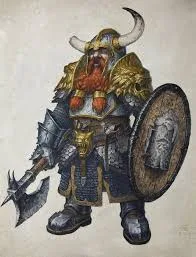
Kingdoms rich in ancient grandeur, halls carved into the roots of mountains, the echoing of picks and hammers in deep mines and blazing forges, a commitment to clan and tradition, and a burning hatred of goblins and orcs – these common threads unite all dwarves.
Stout and Strong
Dwarves were a short race, as their name implied, standing from 4'3"–4'9" on average,[10] with gold dwarves a bit shorter. What dwarves lacked in height they made up for in bulk; they were, on average, about as heavy as humans. A dwarf could weigh anywhere from about 160–220 lbs. Dwarven males were a bit taller and heavier than their female counterparts. Like humans, dwarves had a wide variety of skin, eye, and hair colors. Hazel eyes are common throughout the race.
Male dwarves were often bald and grew thick facial hair, which was sometimes used to display social status. Unusually for humanoids, both sexes naturally grew ample facial hair. Many dwarven women would stay clean shaven to conform with the beauty standards of human societies, but some would revel in their long, luscious beards, or trim them in goatee-style. Dwarven hair was often dark in hue.
Long Lived and Tradition Bound
Dwarves were a long-lived race, though not so much as elves, and reached physical maturity somewhat later than humans. A dwarf was traditionally considered an adult once he or she reached age fifty. Dwarves aged much like humans but over a longer period of time, remaining vigorous well past 150 years. Most dwarves lived to see their bicentennial and a few lived to be over 400.
Dwarves highly valued the ties between family members and friends, weaving tightly knit clans. Dwarves particularly respected elders, from whom they expected sound leadership and the wisdom of experience, as well as ancestral heroes or clan founders. This idea carried on to relations with other races and dwarves were deferential even to the elders of another, non-dwarven race.
Likewise, dwarves, perhaps more so than most other races, turned to their gods for guidance and protection. Non-evil dwarves looked to the divine for comfort and inspiration, while the wicked looked to their divine overlords for methods through which to obtain power over others. Individual dwarves might be faithless, but the race as a whole, regardless of subrace, had a strong inclination for religion and almost every community maintained at least one temple or ancestral shrine.
Nearly every non-evil dwarf worships the great god Moradin, who is viewed as the creator of dwarf kind, having hewed them from stone and upon their deaths will claim them and reforge them into higher beings in the next life on his divine forge.
Most dwarven societies were divided into clans built along family ties and political allegiances. These clans were usually led by hereditary rulers, often monarchs of a sort and descended from the founder of the clan. Dwarves strongly valued loyalty to these rulers and to the clan as a whole and even objective dwarves tended to side primarily with their kin over other races or communities.
These clan structures promoted a tradition of inbreeding. This was so excessive that it was considered one of the reasons for the dwarves' low birth rate.
Most dwarven clans focused on one or two kinds of crafting, such as blacksmithing, jewelry, engineering, or masonry. Dwarves strove to avoid overspecialization by sending some of their youths to other clans to serve as apprentices, which also helped to foster racial unity. Because of their longevity, these apprenticeships might last decades.
Strong Bodies, Stronger Personalities
Whether or not the dwarven claim that they'd been carved from the world's stone was true, dwarves shared many qualities considered similar to the stone they lived with. Strong, hardy, and dependable, dwarves were polite, particularly to elders, and possessed a wisdom beyond that of many other races. Dwarves valued their traditions, regardless of the subrace they came from, and looked for inspiration from ancestral heroes. Dwarves were also known for their stubborn nature and cynicism, traits widespread amongst the dwarves but which contributed to and were commonly offset by their bravery and tenacity.
Dwarven friendship was hard to earn, but was strong once won. Naturally dour and suspicious, the stout folk were slow to trust others, specifically those outside their family, suspecting the worst of an individual until the outsider had proved their goodwill many times. Once this trust was gained, dwarves held their friends to it and viewed betrayals, even minor ones, with a vicious propensity for vengeance.
For dwarves, loyalty was more than a word and they felt that it should be both valued and rewarded. Dwarves believed it a gift and mark of respect to stand beside a friend in combat, and an even deeper one to protect that ally from harm. Many dwarven tales subsequently revolved around the sacrifice of dwarves for their friends and family. Just as dwarves were known for their dependability as friends and allies, dwarves also harbored grudges far longer than many other races. This might be on an individual basis between a dwarf and one who had wronged them, or against entire races, even if warfare with the enemy had long since ceased.
Dwarves were careful and deliberate, with a more serious disposition than other races, who they sometimes viewed as flighty or reckless. A dwarf did all things with care and a stubborn resolve, with brash or cowardly behavior unusual for them. However, dwarves did succumb easily to wrath or greed, which were their most common vices.
Dwarves who left their homeland to become adventurers did so for a number of reasons. In part, a dwarf might be motivated by simple avarice, given the dwarven love of beautiful things. As often, however, a dwarf might be motivated by a drive to do what was right for others (particularly their clan) or a love of excitement because, as settled as dwarves were, they rarely tired of thrills. But even these wayward dwarves retained the spirit of their brethren, hoping that their accomplishments abroad could bring honor to themselves, their clan, or both. Given that successful dwarven adventurers were likely to recover rare items or defeat enemies of the dwarven people during such challenges, this was a hope not entirely without merit.
Ancestral Enemies
Dwarves did not forgive past wrongs easily and the entire race had more or less declared war on goblins and orcs as a whole, wiping them out where they found them. Many dwarves viewed these races as a foul infestation of their mountain homes and felt it was their duty to purge them. Likewise, many dwarves viewed drow and grimlocks with a similar hatred and few dwarves had forgotten their ancestral hatred of the giants who'd once enslaved them.
As competitors for underground resources, dwarves and kobolds frequently fought over subterranean claims. The anti-social sentiments and persecution complex of the kobolds made diplomacy difficult, and while the two didn't always attack each other, neither side needed much provocation to start fighting. Not helping their relations was how dwarves frequently allied with or fought for gnomes against kobold tribes. However, if the two ended up working together due to circumstance, they could discover a common work ethic able to form the foundation of respectful friendships.
Kingdoms rich in ancient grandeur, halls carved into the roots of mountains, the echoing of picks and hammers in deep mines and blazing forges, a commitment to clan and tradition, and a burning hatred of goblins and orcs – these common threads unite all dwarves.
Stout and Strong
Dwarves were a short race, as their name implied, standing from 4'3"–4'9" on average,[10] with gold dwarves a bit shorter. What dwarves lacked in height they made up for in bulk; they were, on average, about as heavy as humans. A dwarf could weigh anywhere from about 160–220 lbs. Dwarven males were a bit taller and heavier than their female counterparts. Like humans, dwarves had a wide variety of skin, eye, and hair colors. Hazel eyes are common throughout the race.
Male dwarves were often bald and grew thick facial hair, which was sometimes used to display social status. Unusually for humanoids, both sexes naturally grew ample facial hair. Many dwarven women would stay clean shaven to conform with the beauty standards of human societies, but some would revel in their long, luscious beards, or trim them in goatee-style. Dwarven hair was often dark in hue.
Long Lived and Tradition Bound
Dwarves were a long-lived race, though not so much as elves, and reached physical maturity somewhat later than humans. A dwarf was traditionally considered an adult once he or she reached age fifty. Dwarves aged much like humans but over a longer period of time, remaining vigorous well past 150 years. Most dwarves lived to see their bicentennial and a few lived to be over 400.
Dwarves highly valued the ties between family members and friends, weaving tightly knit clans. Dwarves particularly respected elders, from whom they expected sound leadership and the wisdom of experience, as well as ancestral heroes or clan founders. This idea carried on to relations with other races and dwarves were deferential even to the elders of another, non-dwarven race.
Likewise, dwarves, perhaps more so than most other races, turned to their gods for guidance and protection. Non-evil dwarves looked to the divine for comfort and inspiration, while the wicked looked to their divine overlords for methods through which to obtain power over others. Individual dwarves might be faithless, but the race as a whole, regardless of subrace, had a strong inclination for religion and almost every community maintained at least one temple or ancestral shrine.
Nearly every non-evil dwarf worships the great god Moradin, who is viewed as the creator of dwarf kind, having hewed them from stone and upon their deaths will claim them and reforge them into higher beings in the next life on his divine forge.
Most dwarven societies were divided into clans built along family ties and political allegiances. These clans were usually led by hereditary rulers, often monarchs of a sort and descended from the founder of the clan. Dwarves strongly valued loyalty to these rulers and to the clan as a whole and even objective dwarves tended to side primarily with their kin over other races or communities.
These clan structures promoted a tradition of inbreeding. This was so excessive that it was considered one of the reasons for the dwarves' low birth rate.
Most dwarven clans focused on one or two kinds of crafting, such as blacksmithing, jewelry, engineering, or masonry. Dwarves strove to avoid overspecialization by sending some of their youths to other clans to serve as apprentices, which also helped to foster racial unity. Because of their longevity, these apprenticeships might last decades.
Strong Bodies, Stronger Personalities
Whether or not the dwarven claim that they'd been carved from the world's stone was true, dwarves shared many qualities considered similar to the stone they lived with. Strong, hardy, and dependable, dwarves were polite, particularly to elders, and possessed a wisdom beyond that of many other races. Dwarves valued their traditions, regardless of the subrace they came from, and looked for inspiration from ancestral heroes. Dwarves were also known for their stubborn nature and cynicism, traits widespread amongst the dwarves but which contributed to and were commonly offset by their bravery and tenacity.
Dwarven friendship was hard to earn, but was strong once won. Naturally dour and suspicious, the stout folk were slow to trust others, specifically those outside their family, suspecting the worst of an individual until the outsider had proved their goodwill many times. Once this trust was gained, dwarves held their friends to it and viewed betrayals, even minor ones, with a vicious propensity for vengeance.
For dwarves, loyalty was more than a word and they felt that it should be both valued and rewarded. Dwarves believed it a gift and mark of respect to stand beside a friend in combat, and an even deeper one to protect that ally from harm. Many dwarven tales subsequently revolved around the sacrifice of dwarves for their friends and family. Just as dwarves were known for their dependability as friends and allies, dwarves also harbored grudges far longer than many other races. This might be on an individual basis between a dwarf and one who had wronged them, or against entire races, even if warfare with the enemy had long since ceased.
Dwarves were careful and deliberate, with a more serious disposition than other races, who they sometimes viewed as flighty or reckless. A dwarf did all things with care and a stubborn resolve, with brash or cowardly behavior unusual for them. However, dwarves did succumb easily to wrath or greed, which were their most common vices.
Dwarves who left their homeland to become adventurers did so for a number of reasons. In part, a dwarf might be motivated by simple avarice, given the dwarven love of beautiful things. As often, however, a dwarf might be motivated by a drive to do what was right for others (particularly their clan) or a love of excitement because, as settled as dwarves were, they rarely tired of thrills. But even these wayward dwarves retained the spirit of their brethren, hoping that their accomplishments abroad could bring honor to themselves, their clan, or both. Given that successful dwarven adventurers were likely to recover rare items or defeat enemies of the dwarven people during such challenges, this was a hope not entirely without merit.
Ancestral Enemies
Dwarves did not forgive past wrongs easily and the entire race had more or less declared war on goblins and orcs as a whole, wiping them out where they found them. Many dwarves viewed these races as a foul infestation of their mountain homes and felt it was their duty to purge them. Likewise, many dwarves viewed drow and grimlocks with a similar hatred and few dwarves had forgotten their ancestral hatred of the giants who'd once enslaved them.
As competitors for underground resources, dwarves and kobolds frequently fought over subterranean claims. The anti-social sentiments and persecution complex of the kobolds made diplomacy difficult, and while the two didn't always attack each other, neither side needed much provocation to start fighting. Not helping their relations was how dwarves frequently allied with or fought for gnomes against kobold tribes. However, if the two ended up working together due to circumstance, they could discover a common work ethic able to form the foundation of respectful friendships.
Traits
Dwarven Resilience
Advantage on saving throws against being Poisoned, Resistance to Poison.
Dwarven Combat Training
Proficiency with battle axe, handaxe, light hammer, warhammer.
Tool Proficiency
Smith’s Tools, Brewer’s Tools, or Mason’s Tools.
Stonecunning
Doubled proficiency bonus for History checks for stonework.